
The UK is in the grip of its third heatwave of 2026. If you have survived a cardiac arrest, this is not just uncomfortable weather. It is a genuine physiological challenge for a heart and a body that have already been through the worst.
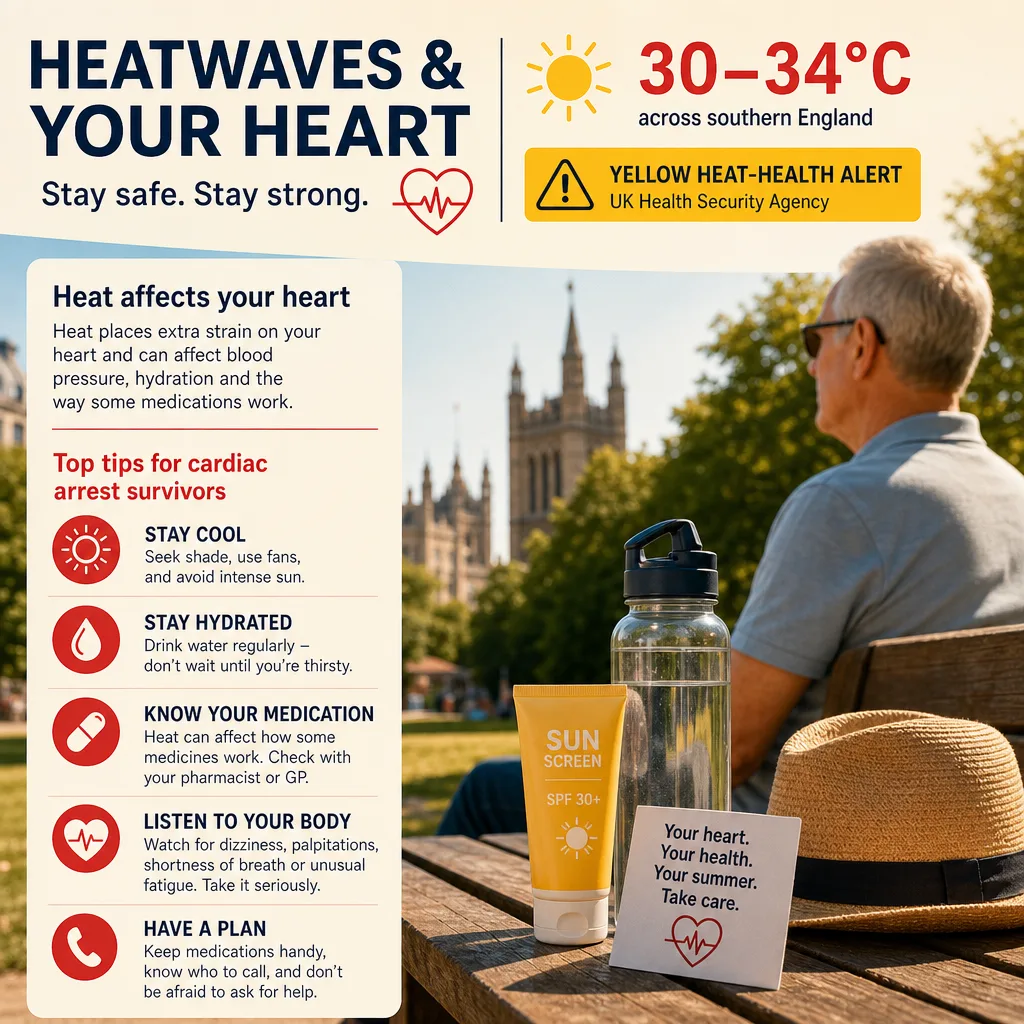
The Met Office has recorded temperatures in the low-to-mid 30s Celsius across southern England this week. The UK Health Security Agency has issued amber and yellow heat-health alerts to match. For most people, that means sun cream and shade. For cardiac arrest survivors, a heatwave interacts with the very systems, and often the very medications, that keep the heart working. Understanding that interaction is the first step to getting through summer safely.
Why Heat Is Harder on a Heart That’s Already Been Through a Cardiac Arrest
Your body cools itself mainly by increasing blood flow to the skin and sweating. Both demand a great deal from the cardiovascular system. The heart has to beat faster and pump harder to dilate blood vessels near the skin and maintain stable blood pressure as fluid is lost through sweat. In a heart with reduced function, that extra demand is harder to meet. This might be because of the cardiac arrest itself, an underlying condition such as ischaemic heart disease, or scarring from a previous event. The British Heart Foundation has more details on how hot weather affects your heart.
Research published in the European Heart Journal describes how extreme heat increases the workload on the cardiovascular system precisely when it has the least capacity to respond. For survivors managing ongoing fatigue or reduced exercise tolerance, this is not an abstract risk. It can mean feeling breathless, dizzy or unusually exhausted far sooner than expected on a hot day.
Medications That Change How Your Body Handles Heat
Many of the medications prescribed after a cardiac arrest exist specifically to protect your heart. Stopping them because of the hot weather is not the answer. However, it is worth understanding how they behave differently when temperatures climb, so you know what to watch for.
Beta-blockers are commonly prescribed after cardiac arrest to control heart rate and reduce arrhythmia risk. They blunt the heart’s ability to increase its rate in response to heat stress. That is exactly what they are designed to do for your rhythm. But it also means your body cannot compensate for heat the way an unmedicated heart would. Overheating can creep up without the usual warning sign of a racing pulse.
Diuretics are often prescribed alongside heart failure or blood pressure medication. They increase fluid loss through urine. Combined with sweating in hot weather, this raises the risk of dehydration and electrolyte imbalances, particularly low sodium and potassium. Those imbalances can themselves trigger dangerous heart rhythms.
ACE inhibitors, ARBs, and SGLT2 inhibitors are frequently used to manage blood pressure and heart failure. They can also affect how your kidneys handle fluid and salt during heat stress. Clinical guidance on heat-related illness specifically flags these medications, alongside diuretics, as ones to discuss with your care team if you become unwell in extreme heat.
Anticoagulants and antiplatelets, such as warfarin, DOACs or aspirin, are not directly affected by heat in the same way. Even so, dehydration thickens the blood. And the dizziness or fainting that can accompany heat exhaustion carries its own risks, including falls, for anyone on blood-thinning medication.
Amiodarone and a handful of other cardiac medications bring a different sun-related risk, separate from heat itself: photosensitivity. Amiodarone, a commonly used antiarrhythmic after cardiac arrest, makes the skin markedly more reactive to sunlight. Studies suggest that somewhere between a quarter and three-quarters of people taking it develop a sunburn-like reaction on sun-exposed skin, typically the hands, face and neck, and some go on to develop a blue-grey skin discolouration with long-term use. Thiazide diuretics (such as bendroflumethiazide or indapamide), some statins, and certain calcium-channel blockers such as amlodipine can also increase sun sensitivity, usually less dramatically than amiodarone. If you take any of these, broad-spectrum SPF 30 to 50 sunscreen, covering exposed skin, and avoiding direct sun are not just general heatwave advice; they are a specific precaution your medication makes necessary. A systematic review in the European Heart Journal – Cardiovascular Pharmacotherapy and the FDA’s guidance on the sun and your medicine both cover this in more detail.
None of this means changing your medication on your own. It means recognising that your usual doses were prescribed for ordinary conditions, not a heatwave. Your GP or cardiology team is the right person to speak to if you are worried, particularly before any planned change.
Living With an ICD in Hot Weather
If you have an implantable cardioverter defibrillator (ICD), a heatwave brings an additional consideration. Research presented by the American Heart Association examined extreme outdoor heat above roughly 38 degrees Celsius. It found this was associated with a near-tripling of the risk of atrial fibrillation episodes in people with implanted cardiac devices. That risk rose in step with the temperature.
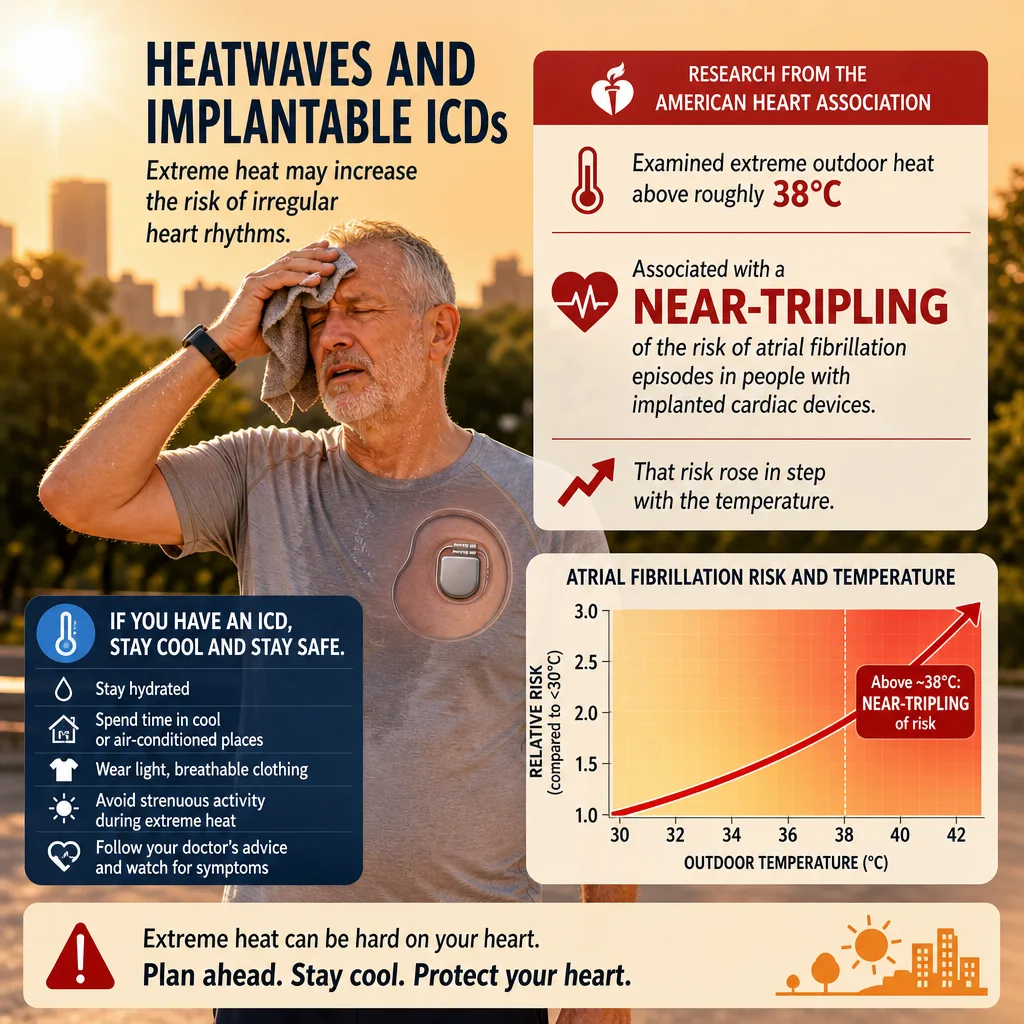
The device itself is not damaged by heat or sweat. You can shower, sweat and go about daily life exactly as normal. The concern is not the hardware. It is the same strain on your underlying heart rhythm that affects any cardiac arrest survivor in hot weather, simply measured more precisely because your ICD is watching every beat.
If you notice more frequent alerts from your device, feel palpitations you would not normally expect, or receive a shock during a heatwave, contact your implant clinic. Do not assume it is “just the heat” without having it checked. Our page on everyday ICD precautions covers the broader dos and don’ts, and we explored how these devices work in our recent piece on Christian Eriksen’s on-pitch ICD shock.
Sequelae That Can Flare Up in the Heat
Heat not only affects the heart directly. Many of the after-effects of cardiac arrest that survivors already manage can worsen in hot weather.
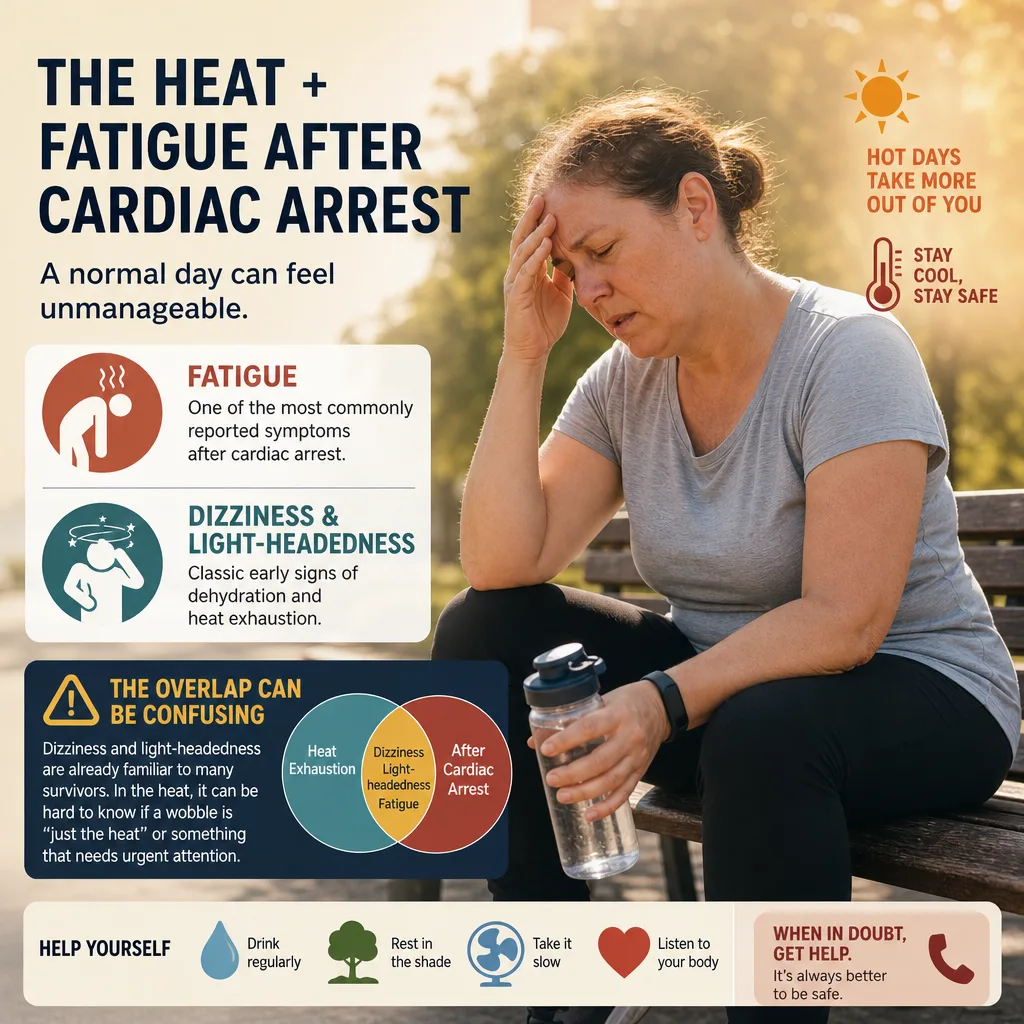
Fatigue is one of the most commonly reported symptoms after cardiac arrest. Heat is exhausting even for people with no cardiac history. Combine the two, and a normal day can feel unmanageable. Dizziness and light-headedness, already familiar to many survivors, are also classic early signs of dehydration and heat exhaustion. That overlap can make it genuinely difficult to tell whether a wobble is “just the heat” or something that needs urgent attention.
Heat can also be an unexpected trigger for anxiety and PTSD symptoms. A racing heart, breathlessness and sweating are ordinary responses to hot weather. But for someone whose heart once stopped, those same sensations can feel alarmingly familiar. If that happens to you, it does not mean something is wrong with your heart. It means your body is pattern-matching a memory it would rather forget. That response is worth naming, whether to a GP, a counsellor, or simply to someone in the SCA UK community who has felt it too. We explore this pattern-matching effect in greater depth to understand emotional changes after cardiac arrest.
Evidence-Based Ways to Stay Safe This Heatwave
Most heat-related advice is generic. This is what matters specifically if you are living with the aftermath of cardiac arrest.
Stay ahead of dehydration, not behind it. Drink water regularly throughout the day rather than waiting until you feel thirsty, since thirst is a lagging signal. If you are on a fluid restriction for heart failure, do not simply increase your fluid intake. Speak to your care team first, and ask how a heatwave should change your specific plan, if at all.
Keep your body cool, not just your mood. Stay in air-conditioned or well-shaded, well-ventilated spaces during the hottest part of the day, generally 11 am to 3 pm. A fan, cool showers, and damp cloths on the wrists and neck all genuinely help your cardiovascular system work less.
Move your exercise, don’t cancel your rehab. If you are in cardiac rehabilitation or maintaining a fitness routine, shift activity to early morning or evening. Reduce intensity, and treat any heatwave day as a legitimate reason to scale back, not skip entirely.
Know your own red flags. Chest pain, a pounding or irregular heartbeat that does not settle, confusion, fainting, or a headache that will not shift are reasons to stop, cool down, and seek help. That might mean calling 111, your GP, or 999 if things feel serious. If your ICD shocks you, follow the same advice your team has already given you for any shock, heatwave or not.
Talk to your team before the next heatwave, not during it. If you take diuretics, ACE inhibitors, ARBs or SGLT2 inhibitors, ask your GP or cardiologist now what they would want you to do if you become unwell in hot weather. Having that answer in advance is far better than guessing while dizzy in a 32-degree kitchen. It is exactly the kind of proactive, individualised follow-up that our recent piece on cardiac arrest recovery being the weakest link argues survivors deserve as standard.
Take Action
If you are a cardiac arrest survivor: Do not change your medication because of the weather without speaking to your care team first. Do keep a close eye on how you feel, stay ahead of your fluids, and treat unusual dizziness or breathlessness seriously.
If you are a co-survivor or carer: Watch for the person you support becoming unusually quiet, confused or unsteady in hot weather. These can be subtle early signs that are easy to miss. Consider connecting with the SCA UK community for peer support.
If you work in cardiac care: A heatwave is a good moment to proactively contact patients on diuretics, RAAS inhibitors or SGLT2 inhibitors. Send clear, individualised guidance rather than waiting for a heat-related admission.
Living with the after-effects of cardiac arrest?
You don’t have to navigate summers like this one alone. Join the SCA UK community for peer support, practical guidance, and people who understand exactly what a heatwave feels like when your heart has already been through so much.
Further Reading
This article draws on Met Office heatwave forecasts and UK Health Security Agency heat-health alerts. It also draws on the European Heart Journal review of extreme heat and cardiovascular health, and American Heart Association research on extreme heat and arrhythmia risk in people with implanted cardiac devices. For further practical guidance, see the British Heart Foundation’s advice on hot weather and heart conditions, the NHS guide to heat exhaustion and heatstroke, the government’s Beat the Heat guidance, and Harvard Health’s commentary on heart problems and the heat.
This article is for general information. It does not replace personalised medical advice. If you are concerned about how the heat affects your medication or your device, speak to your GP or cardiology team.

After our first meet-up in February 2015, I realised I was not alone. It was the first time since my cardiac arrest the previous year that I had spoken face-to-face with someone who had experienced what I had. This was also true for my wife, who also happened to be my lifesaver. From that meet-up, the idea of SCA UK was born. Since then, we have achieved a considerable amount, primarily providing information, resources and support to others in a similar situation but also raising the profile of survivorship and the need for better post-discharge care. We are starting to get traction in this, and with the formation of the charity, I genuinely believe we have a bright future ahead and will make a significant difference in the lives of many who join our ranks.