
A small charity, a vast city, and 26.2 miles of nerve
Sunday 26 April 2026. London put on its best spring frock for the occasion. Bright skies greeted the early starters, with a flirtatious breeze for company. Then, somewhat impolitely, a creeping Mediterranean warmth settled in. By noon, the tarmac was whispering unkind things to anyone with a late start. Welcome, as one might say through gritted teeth, to the Team SCA UK London Marathon debut.
For Sudden Cardiac Arrest UK, this was no ordinary outing. Indeed, it was the first time the charity had its own contingent at the start line of the world’s most famous 26.2-mile race. We were lucky beneficiaries of the new charity ballot. The announcement, frankly, was met with the same kind of hysteria one might expect from someone who has just matched the first three lottery numbers and is awaiting the rest.
It is also worth saying, plainly, that buying a charity place is no small thing for an organisation of our size. Each runner’s spot represents a meaningful chunk of the budget. Therefore, when the day went as splendidly as it did, there was a collective, rather audible sigh of relief from the trustees.
How the team came together (and partly fell apart)
Around thirty hopefuls answered the initial call. After much deliberation — and the gentle massaging of several spreadsheets — a team was selected. Then, as the marathon gods will have it, life intervened. Injuries flared. Schedules collided. Health gave way. Of the original team, only one made it from the list to the start line: a chap called Josce. Replacements were drafted. Then replacements for replacements. Getting to the start line, as our trustees will quietly tell you over a cup of tea, can sometimes be tougher than the marathon itself.
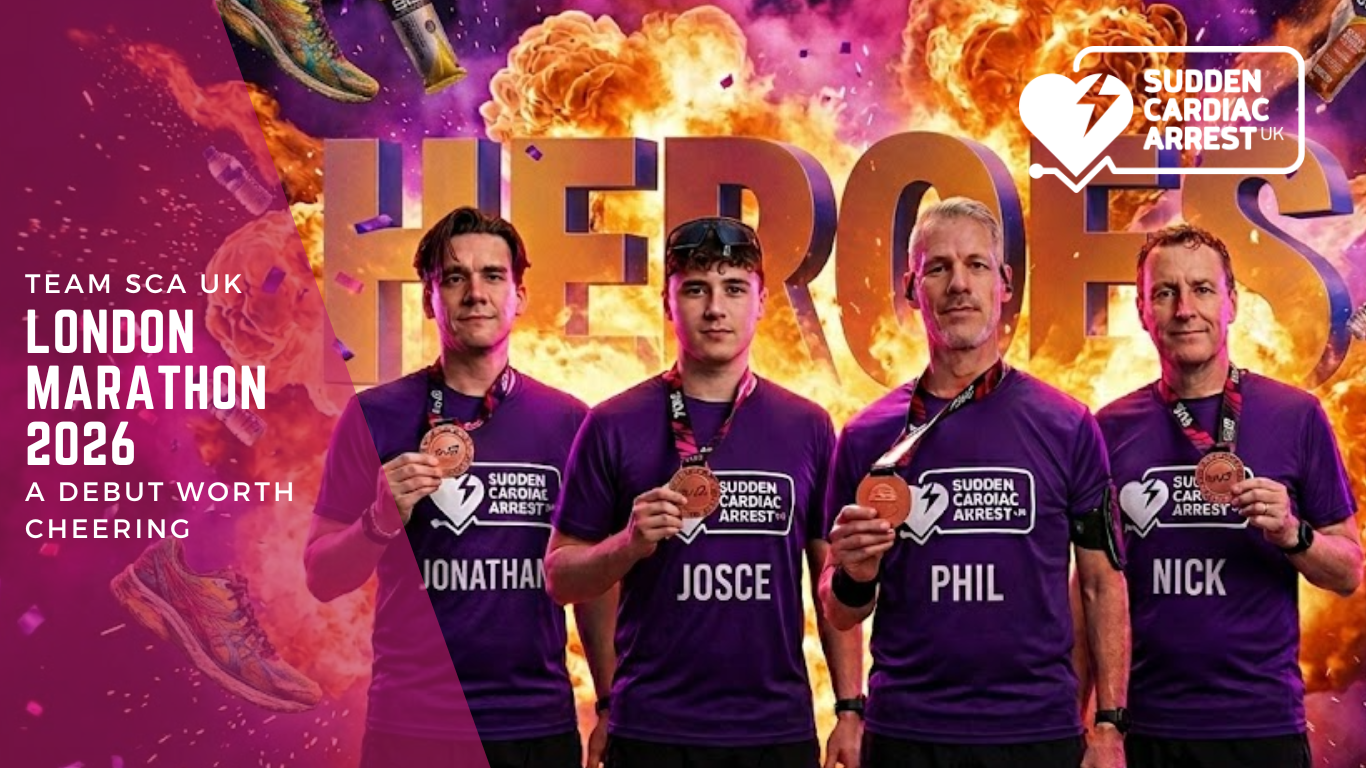
Yet four runners did make it onto the course in SCA UK colours. What a quartet they proved to be.
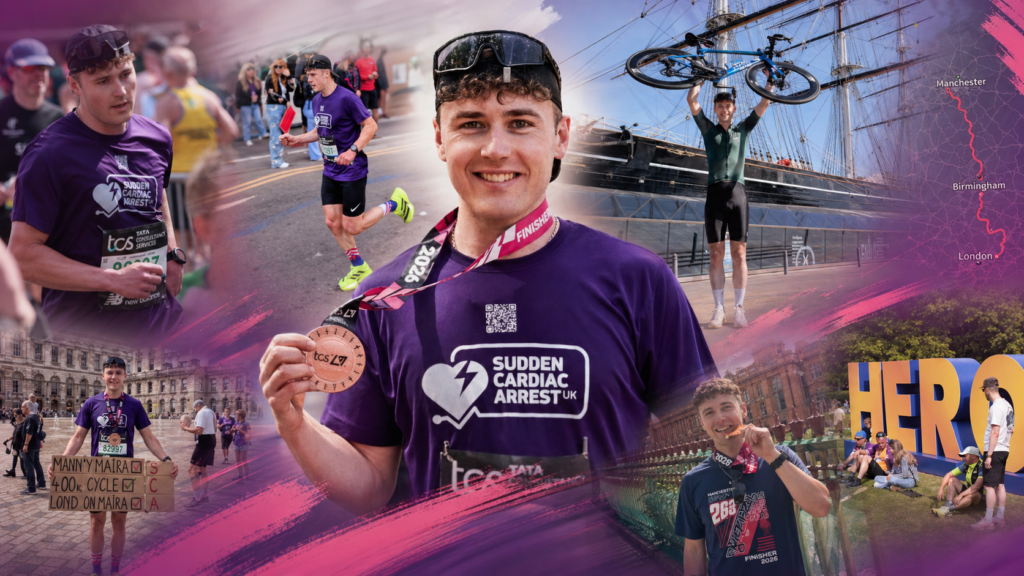
Josce Syrett: 500km, eight days, and a quiet sub-three
Settle in, because this one is a story.
Josce Syrett is a co-survivor whose father, Trevor, had a sudden cardiac arrest at home. Thanks to a defibrillator, swift CPR delivered by Josce, and the Essex Cardiothoracic Centre in Basildon, Trevor pulled through. SCA UK supported Josce through what followed, which is partly why he decided that simply running 26.2 miles for us would be, well, a touch tame.
Therefore, he ran the Manchester Marathon the weekend before in 2:51:16 — a nine-minute personal best, despite cramp, an elevated heart rate, and a phone he managed to smash before the start. Most of us would have called it a day, but Josce called it Sunday.
Then, he climbed onto a bicycle and rode 416 kilometres from Manchester to Greenwich. There was a puncture. There was a cheerful note that he didn’t fancy going anywhere near Wolverhampton again. By the time he was done, his legs were having a quiet word with him.
He then turned up at Greenwich on Sunday morning and ran the London Marathon in 2:59:04. His own assessment was beautifully understated: “Pretty steady, pretty consistent, pretty happy considering how horrific my legs felt from the gun.” For context, that finish time pipped Formula 1 champion Sebastian Vettel by mere seconds. Vettel won four world titles. Josce had cycled from Manchester. Ours, we feel, is the more impressive feat.
Two sub-three marathons in successive weekends, 500km in eight days, and a fundraising tally that has cantered well past his target. Astonishing, really.
Donate to SCA UK via Josce’s fundraiser
Phil Richards: stepping up when it mattered most
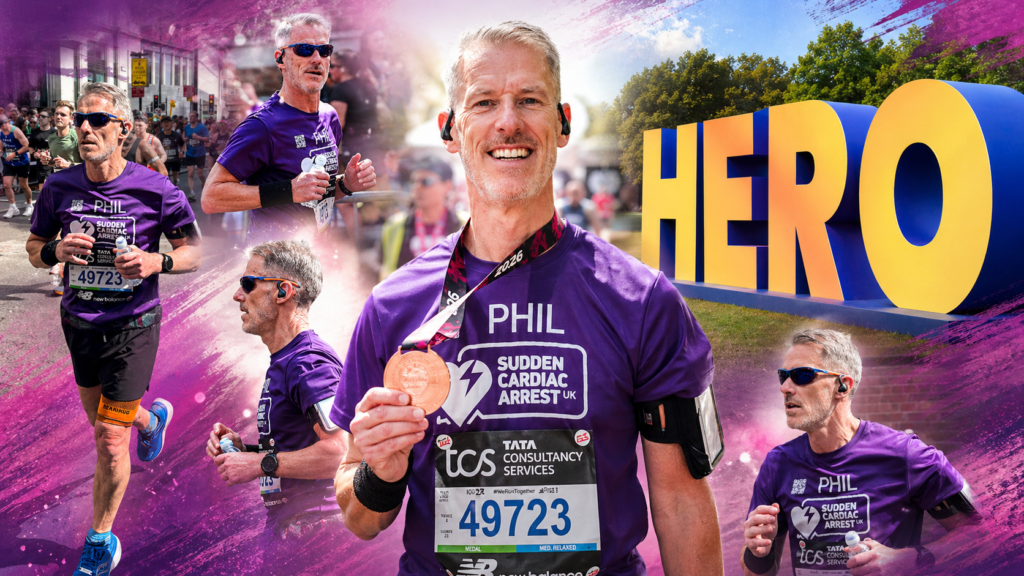
Phil Richards is a close friend of co-survivor and trustee Stuart Menzies. When the call went out for a replacement, Phil — gamely, perhaps slightly madly — stepped in. The build-up was unkind. Niggles became injuries, and only Phil and his physio knew quite how rough things were. He hadn’t even told his wife.
In his own words afterwards: “I honestly didn’t think I would manage. By mile 16 I was really struggling, so started jeffing just to get me through. Fantastic fundraising from my fellow runners — you all did amazing.”
There is a particular kind of courage in turning up to a start line when your body has been less than cooperative for weeks. Phil also happened to be 112 days dry in the run-up. He has, we are informed, plans to spend a generous portion of May in a pub. We could not begrudge him a single sip.
Donate to SCA UK via Phil’s fundraiser
Dr Nick Thomas: the GP, the survivor, and the back end of an alpaca
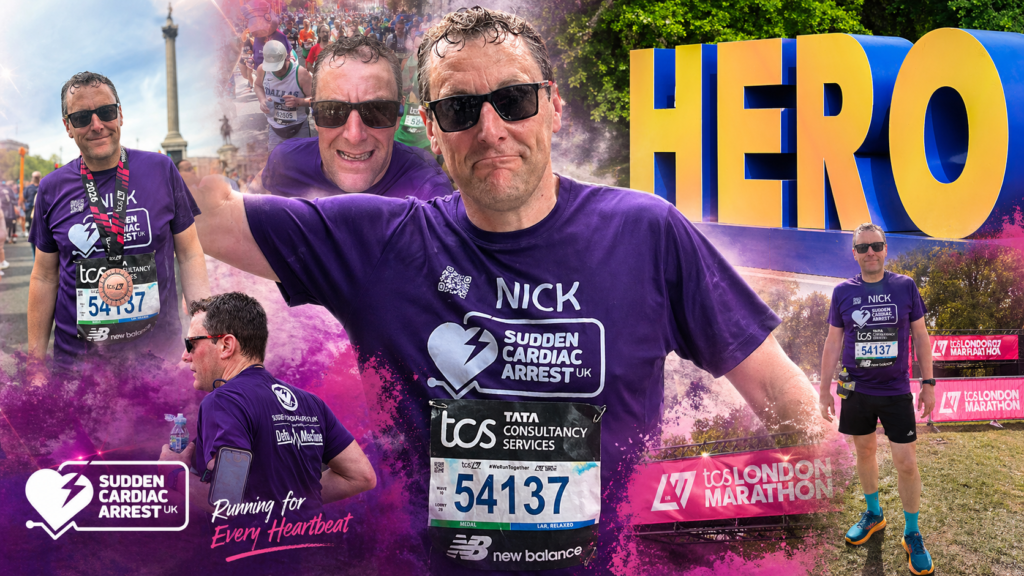
Dr Nick Thomas is an SCA survivor. He collapsed during a dad’s football match in August 2023, and was brought back by CPR and a defibrillator delivered by — handily — a firefighter, a police officer and a flight attendant who happened to be on hand. Three months later, he was back playing football. He has since made it his mission to spread the word about CPR.
He is also a GP in Oxfordshire, husband to Judith, and father of three. He has run the Oxford Half Marathon twice — most recently as the back end of an alpaca, which is the sort of detail one simply has to include. Quite who was at the front end is a matter for another article.
Nick joined Team SCA UK rather late compared to the rest, so his fundraising had to start on a sprint. Cleverly, he turned his GP surgery into a fundraising station, and the total raced past his initial target, so much so that he doubled it. One imagines a few flu jabs were administered with extra theatrical flair in the run-up.
His later start time meant he ran straight into the hottest part of the day. His reflection afterwards was characteristically warm: “What a day and what a truck of money! My legs don’t work, I’ve sobbed to the wife, it’s all great. Hope that we represented the charity well!”
You did, Nick. You really did.
Donate to SCA UK via Nick’s fundraiser
Jonathan Gilbert: from joke offer to finish line in three weeks
A quick word, first, about Robyn Dwyer. Robyn, a co-survivor, came on board as a replacement with the kind of warm enthusiasm that makes charity team leads quietly weep with relief. Sadly, health reasons forced her to withdraw before race day. However, that did not stop the fundraising — her page sailed comfortably past the four-figure mark. Sometimes, the marathon you don’t run still moves people. Robyn’s certainly did.
Enter Jonathan Gilbert. Managing Director of Defib Machines and an official supporter of the Team SCA UK London Marathon effort, Jonathan has, by his own admission, a habit of making bold statements. While chatting to trustee Gareth, he jokingly offered to run the marathon himself if anyone dropped out. Three weeks before race day, Robyn had to withdraw — and Jonathan, true to his word, picked up the baton.
On minimal training and maximum chutzpah, he completed the course in fine spirit. Furthermore, he raised a four-figure sum on top of the considerable sponsorship his company already provides. As one donor put it rather succinctly: “You are all heroes.”
Donate to SCA UK via Jonathan’s fundraiser
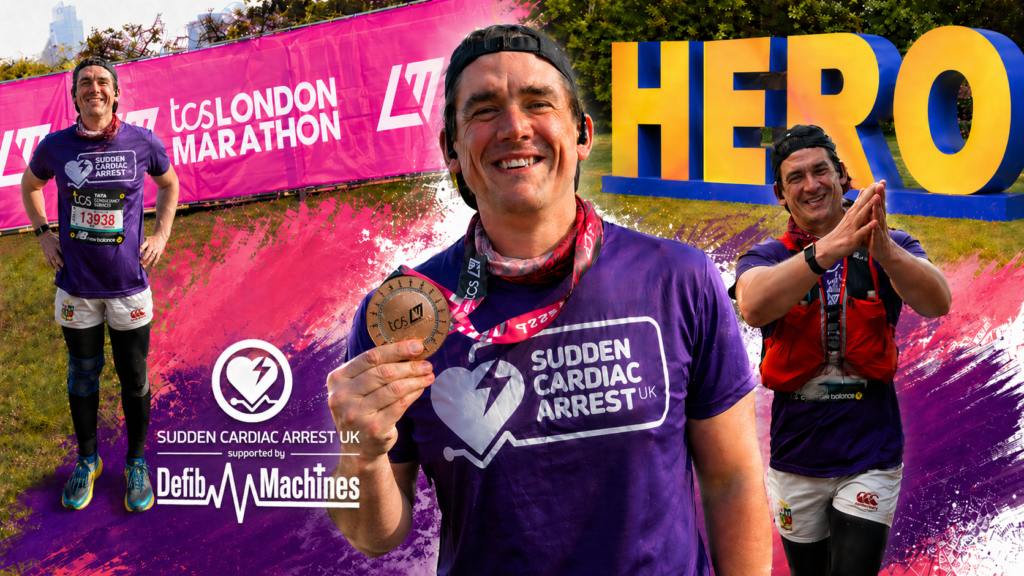
A truck of money: the £20,000 question
Now, about that fundraising. We had set quietly optimistic individual targets. We had hoped, with fingers tightly crossed, that the team might collectively reach a respectable total. Instead, our four-strong Team SCA UK London Marathon debut has, at the time of writing, raised a combined sum hovering around £20,000. Twenty thousand pounds. From four runners. For a charity that runs entirely on volunteers and donations, that is, frankly, life-changing.
Trustee Gareth Cole, watching from the sidelines and now apparently in need of his own physiotherapist, summed it up rather well: “We were hoping against hope for £2k per person, and we thought even that was optimistic. What you’ve all raised is just beyond comprehension. Still in awe of you all.”
Paul Swindell, our chair, added: “Amazing performances, outstanding fundraising and brilliant support. You have certainly set the bar high for future SCA UK marathon endeavours.”
Behind the scenes: the steady hands
None of this happens without leadership, and SCA UK is fortunate to have two formidable women at its core. Joanna Balgarnie, our team lead trustee, is herself an SCA survivor. Full disclosure: she once ran a marathon in her twenties to impress someone she rather fancied. Whether the romantic mission succeeded is, sadly, lost to history. The marathon, however, was completed. The standards were set early.
Tracy Swindell, co-survivor and former international marathon runner, provided support and running advice throughout. Her PB? A scarcely-credible 2:40:22, which made her the third British woman home at the 1997 London Marathon. When she tells you about pacing, in short, you listen.
On the course, on the cheer line
A special mention, too, for the SCA UK supporters who turned out along the route to clap, shout, and wave with sustained enthusiasm. Anyone who has ever pinned on a number knows what a familiar face at mile 18 is worth. As Phil himself put it: “Yes we ran a marathon. However, the really hard work is done day in and daily by you fine people.”
If you are reading this and thinking you fancy joining the cheer squad next year, please do. The more, the merrier — and the louder, frankly, the better.
Want to run for SCA UK in 2027? Here is the bit you need to read
We would love more runners in our colours next year. However, our charity ballot places are limited, and we cannot offer one to everyone who would like one. Therefore, if you are thinking of running the 2027 London Marathon for SCA UK, we strongly encourage you to enter the open ballot — and to do so quickly. The ballot closes tomorrow. It is free to enter. More than 1.2 million people entered last year, so you will be in good company.
If you are lucky enough to win a place, get in touch, and we would be delighted to support your fundraising. If not, we may still be able to offer a small number of charity places, but those are precious and will go fast.
The real headline: inspiration
Numbers and finish times tell only part of the story. The bit that lingers, frankly, is what these four people represent.
Consider Nick. Fewer than one in ten people survive an out-of-hospital cardiac arrest. Of those who do, vanishingly few go on to complete a marathon. Running 26.2 miles is hard for anyone; running it as someone whose heart, less than three years ago, simply stopped is a feat of physical and mental strength that ought to make the rest of us put our excuses away. Nick is, plainly, an inspiration to other survivors wondering whether they will ever feel like themselves again, to co-survivors waiting for proof that the future can still be expansive, and to anyone who is just a bit tired today and could do with the reminder.
Josce shows what a co-survivor can carry, and then carry further. Phil shows that you can rock up under-trained and undeterred and still do something remarkable. Jonathan shows what happens when a throwaway offer meets a moment of need. Each of them, in their own way, has handed somebody else permission — to start, to try, to keep going.
That, more than the medals or the money, is what we are most proud of.
A first for SCA UK — and not the last
The 2026 race was historic on a global scale, with Sabastian Sawe shattering the two-hour barrier in 1:59:30. Yet for our small charity, the more meaningful history was being made well behind the elites. Four runners. One inaugural team. Upwards of £20,000 has been raised for survivors and co-survivors of cardiac arrest. The Team SCA UK London Marathon journey began with a ballot place, a dream, and a great deal of nervous emailing.
It ended with finishers’ medals around the necks of people whose lives, in one way or another, have been touched by sudden cardiac arrest. We could not be prouder of every one of them.
If you would like to help us keep doing what we do, you can donate to SCA UK here. And if you would like to follow the team’s adventures more closely, why not become a Friend of SCA UK? You can join up at the friends sign-up page, and as a Friend, you will receive our digital magazine Phoenix, where you can read more about Team SCA UK, hear from survivors and co-survivors, and keep up with everything our small but mighty charity is up to.

After our first meet-up in February 2015, I realised I was not alone. It was the first time since my cardiac arrest the previous year that I had spoken face-to-face with someone who had experienced what I had. This was also true for my wife, who also happened to be my lifesaver. From that meet-up, the idea of SCA UK was born. Since then, we have achieved a considerable amount, primarily providing information, resources and support to others in a similar situation but also raising the profile of survivorship and the need for better post-discharge care. We are starting to get traction in this, and with the formation of the charity, I genuinely believe we have a bright future ahead and will make a significant difference in the lives of many who join our ranks.
Hi all thanks for such a brilliant write up about running the marathon and a massive well done to you all for completing it ( I’ve been there a lot of years back ) .
Thank you to all involved, so inspiring! I will be cheering on next year!
Amazing effort Team SCA UK – thank you from a SCA Survivor and my family. Great write up Paul – really made me feel very emotional!
What a fantastic achievement by all the SCA runners and some incredible stories that truly inspire others. As someone who survived three SCAs five weeks ago whilst in a training circuit, it’s reassuring to see what can be achieved. That offer to sign up for 2027 is very inviting!