
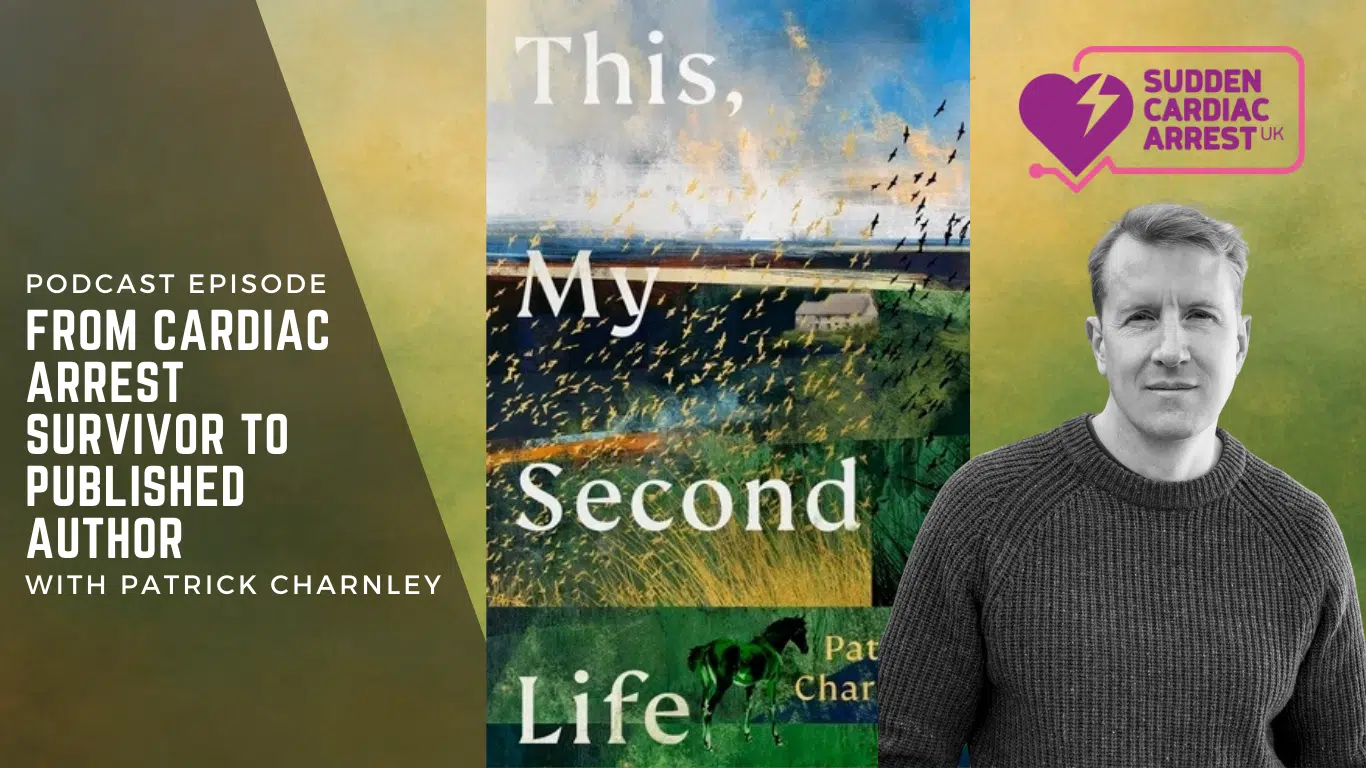
Patrick Charnley was a busy music lawyer, a father juggling homeschooling during lockdown, and a man who had been ignoring the warning signs his body was giving him. Then, on the 1st of February 2021, Patrick suffered a cardiac arrest that would change his life forever.
In this episode of the Life After Cardiac Arrest Podcast, I sit down with Patrick Charnley to discuss the night of his cardiac arrest, the severe brain injury that followed, and the unexpected path that led him to become a published author.
What happened to Patrick Charnley?
Patrick Charnley’s cardiac arrest struck without warning during a family dinner at home. His heart stopped for around 40 minutes before paramedics were able to restore a heartbeat. He woke days later with a severe brain injury, no memory of what had happened, and a long road of recovery ahead of him.
In the podcast, Patrick speaks openly about the confusion, hallucinations, and blindness he experienced in those early weeks. He describes the invisible challenges of brain injury — from crushing fatigue and memory loss to a rare condition called Charles Bonnet syndrome. His honesty about these struggles makes this episode essential listening for cardiac arrest survivors, their families, and anyone who wants to understand what recovery really looks like.
How did Patrick Charnley’s brain injury lead to writing a novel?
But this is not just a story about what was lost. Patrick Charnley describes how, amid the most difficult period of his life, he found moments of extraordinary peace — and how those experiences compelled him to pick up a pen.
Writing by hand in A5 notebooks, just a few pages at a time, Patrick slowly crafted his debut novel, This My Second Life. The book is set on a remote Cornish farm where a young man recovers from a cardiac arrest while an old-fashioned crime story unfolds around him. Patrick reveals that his brain injury actually unlocked a new quality and honesty in his writing that simply was not there before — a remarkable silver lining that listeners will find deeply inspiring.
The novel carries quiet tributes to Patrick’s mother, the acclaimed author Helen Dunmore, and draws on his lifelong connection to Cornwall and the healing power of nature. You will want to listen to discover how those threads weave through the story.
Patrick Charnley on the BBC
Since its publication in early 2026, Patrick Charnley’s book This My Second Life has received widespread critical acclaim. Patrick has recently been featured on the BBC discussing his cardiac arrest and the story behind the novel. This media attention is helping to raise awareness of cardiac arrest survival and brain injury — topics that Patrick feels passionately about.
Why should you listen to this episode?
This episode of the Life After Cardiac Arrest Podcast covers honest, important ground. We discuss the impact of cardiac arrest on families, the isolation that survivors often face, practical tips for managing fatigue, and the therapeutic power of creative expression. Patrick also shares a compassionate message of hope for anyone who is early in their recovery journey.
Whether you are a cardiac arrest survivor, a co-survivor supporting a loved one, or simply someone who wants to understand this experience better, this episode is well worth your time.
Where can you buy Patrick Charnley’s book?
This My Second Life by Patrick Charnley is available at all good bookshops and online. Patrick describes it as “a soothing read” that he hopes gives readers a sense of peace — and based on the critical response so far, it is doing exactly that.
Listen to the full episode on the Life After Cardiac Arrest Podcast, available on Spotify, Apple or wherever you get your podcasts.

After our first meet-up in February 2015, I realised I was not alone. It was the first time since my cardiac arrest the previous year that I had spoken face-to-face with someone who had experienced what I had. This was also true for my wife, who also happened to be my lifesaver. From that meet-up, the idea of SCA UK was born. Since then, we have achieved a considerable amount, primarily providing information, resources and support to others in a similar situation but also raising the profile of survivorship and the need for better post-discharge care. We are starting to get traction in this, and with the formation of the charity, I genuinely believe we have a bright future ahead and will make a significant difference in the lives of many who join our ranks.